

For Emuobosa Patience Ojoboh, geology is not just about rocks beneath the surface, it is about people, water, and the long-term sustainability of communities living in energy-producing regions.

As an undergraduate geoscience student in Nigeria, Ojoboh carried out field-based research that addressed a pressing but often overlooked challenge in the Niger Delta: the vulnerability of shallow groundwater systems in oil-producing communities. Her work focused on the Warri–Sombreiro depositional environment, a region where residents rely heavily on groundwater for drinking, domestic use, and agriculture, even as industrial activity, waste disposal, and rapid urbanization increase contamination risks.
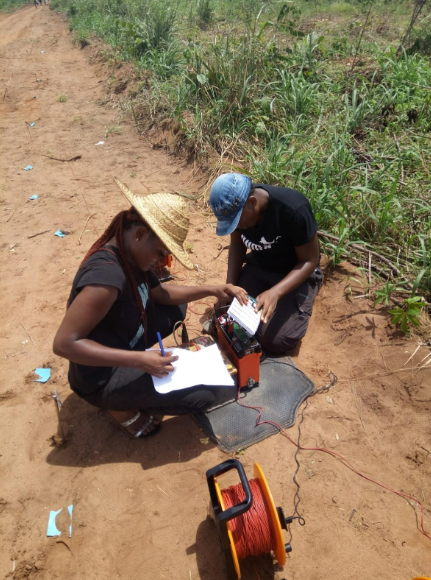
Working directly in the field, Ojoboh applied geophysical resistivity methods to investigate subsurface conditions and evaluate aquifer protective capacity. By collecting and interpreting electrical resistivity data, she was able to characterize subsurface lithology, identify zones of higher permeability, and assess pathways through which contaminants could migrate into groundwater systems. The research provided data-driven insight into how shallow aquifers in the region respond to environmental stressors, offering practical information relevant to both environmental protection and land-use planning.
What set Ojoboh’s work apart was not only its technical execution, but its relevance to real-world decision-making in an energy-producing region. In areas like Warri, where petroleum activities coexist with residential communities, understanding groundwater vulnerability is essential for protecting public health and ensuring sustainable resource development. Her findings highlighted the importance of integrating subsurface data into environmental monitoring strategies, particularly in regions where regulatory oversight and infrastructure may be limited.
Beyond its immediate local relevance, the research demonstrated how data-driven subsurface analysis can support broader petroleum and energy decision-making. The same geophysical and analytical approaches used to evaluate aquifer vulnerability are foundational to reservoir characterization, environmental risk assessment, and sustainable field development planning. By combining field measurements with quantitative interpretation, Ojoboh’s work exemplified how applied geoscience and data analysis intersect in modern petroleum engineering practice.
The significance of her undergraduate research was later validated through peer-reviewed publication with the Society of Petroleum Engineers (SPE), a globally recognized professional organization whose technical literature is accessed by engineers and geoscientists worldwide. Through this publication, Ojoboh’s work transitioned from a localized field study into part of the global technical record, contributing to professional discussions on groundwater protection, subsurface characterization, and environmental stewardship in deltaic petroleum provinces.
Today, Ojoboh’s academic trajectory reflects the same data-driven philosophy that guided her early research. With advanced training in geoscience and data science, she continues to work at the intersection of subsurface data, analytics, and energy systems demonstrating how localized field research can evolve into globally relevant contributions within petroleum data science and applied geoscience.
Her work serves as a reminder that meaningful innovation in energy does not begin only in laboratories or boardrooms, but often in communities where science, data, and societal needs meet beneath the surface.