

For decades, marketing has largely revolved around a familiar question: how can businesses persuade people to buy?
But as technology gives companies unprecedented access to consumer behaviour, preferences and personal data, a new question is beginning to emerge: what should businesses do with the power to influence people?
That question sits at the heart of Spiritual Marketing, an emerging approach that seeks to put purpose, values, humanity and responsible value creation at the centre of business and marketing.
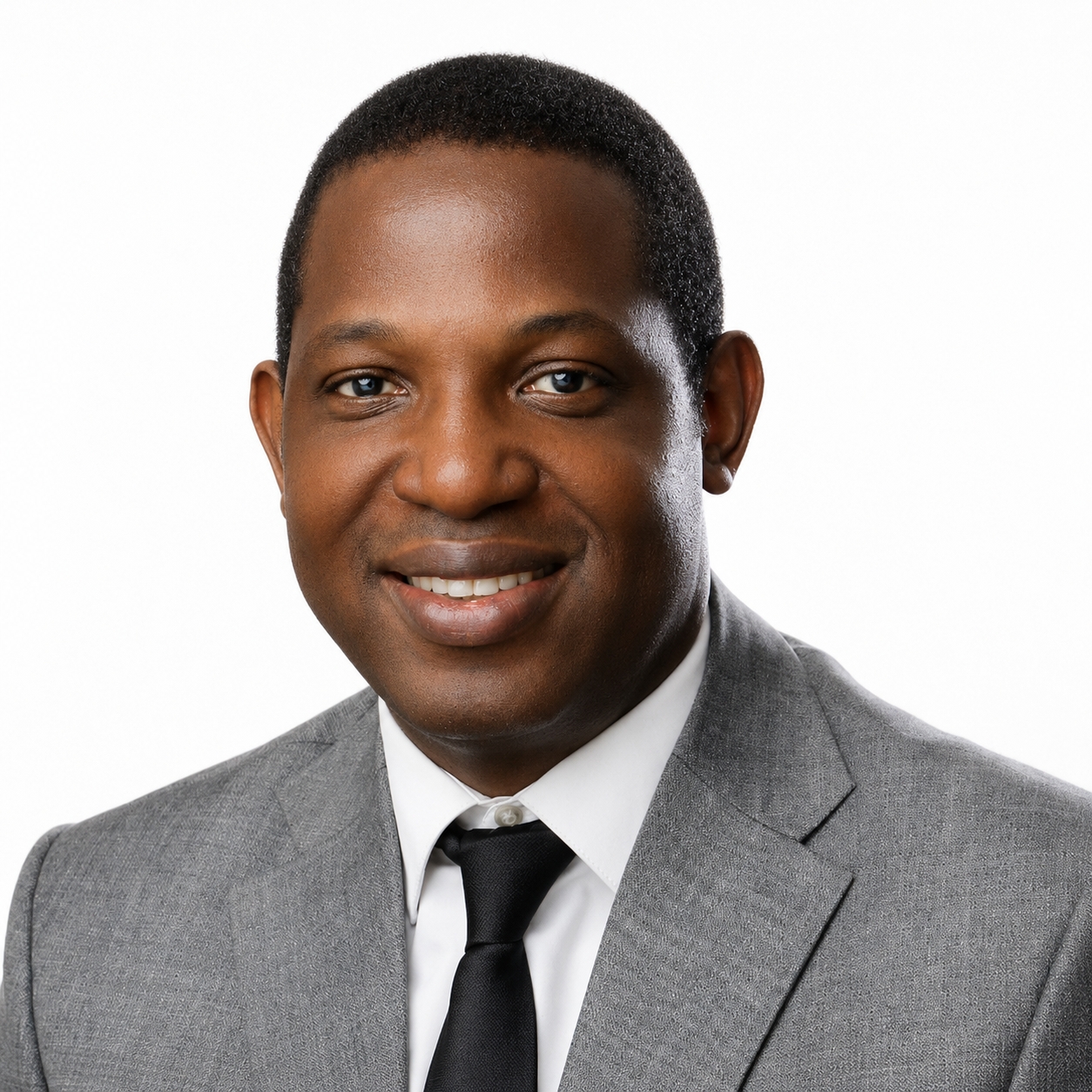
According to Oluwafemi Adeniba, one of the researchers advancing the concept, Spiritual Marketing is not about selling religion or abandoning conventional marketing. Rather, it is about “creating value without losing our humanity.”
At its simplest, Spiritual Marketing asks businesses to see customers as more than data points or sources of revenue. Behind every transaction is a person whose money, trust, aspirations and circumstances matter.
This represents a subtle but important shift. Traditional marketing may ask, How do we get people to choose us? Ethical marketing may ask, What is the right thing to do? Spiritual Marketing goes deeper by asking, Why are we doing this, who are we affecting, and what value are we creating?
Adeniba argues that this approach becomes particularly important in an age when sophisticated data can reveal not only what consumers want, but also their fears, weaknesses and vulnerabilities.
The ability to exploit such information, he suggests, should not automatically become a justification for doing so. A financial institution, for instance, may have the technology to identify customers most likely to accept a loan. Spiritual Marketing would require the institution to consider whether the loan is actually suitable for the customer’s circumstances and whether the customer understands its implications.
The objective, therefore, is not simply to complete a successful transaction, but to create a valuable transaction.
This philosophy also extends beyond customers. Adeniba describes “Spiritual Capital” in terms of moral, social, cultural and human capital, arguing that businesses can accumulate intangible assets such as trust, credibility, relationships, knowledge and goodwill.
A company may record strong profits while quietly exhausting these assets. Similarly, an organisation that achieves its targets by continually exhausting its employees may appear successful financially while weakening the foundation on which future growth depends.
This is why, in the Spiritual Marketing framework, workplace culture matters. Employees who experience dignity, fairness, trust and purpose are more likely to transmit those qualities to customers. As Adeniba puts it, “You cannot consistently give customers an experience that your employees don’t experience themselves.”
For Nigerian businesses, the concept may be less foreign than it initially sounds. Consider a household appliance retailer. Instead of simply pushing the most expensive refrigerator, a salesperson could ask about the customer’s budget, household size and electricity supply before recommending a product. The business still makes money, but through creating value rather than merely extracting it.
In a market where trust and personal recommendations often influence buying decisions, such relationships can become commercially significant.
Ultimately, Spiritual Marketing challenges the assumption that business success can be adequately measured by revenue alone. Profit remains important, but Adeniba argues that businesses should also ask whether customers are better off, employees are developing, relationships are healthy, values remain visible when difficult decisions arise, and communities are positively affected.
The idea therefore goes beyond another marketing tactic. It proposes a different lens for understanding business success: purpose, people, principles and prosperity.
In Adeniba’s formulation, the journey is from transaction to relationship, and ultimately from relationship to stewardship.
For an industry that has become increasingly sophisticated at persuading people, Spiritual Marketing poses a more fundamental question: what is all that persuasive power ultimately for?